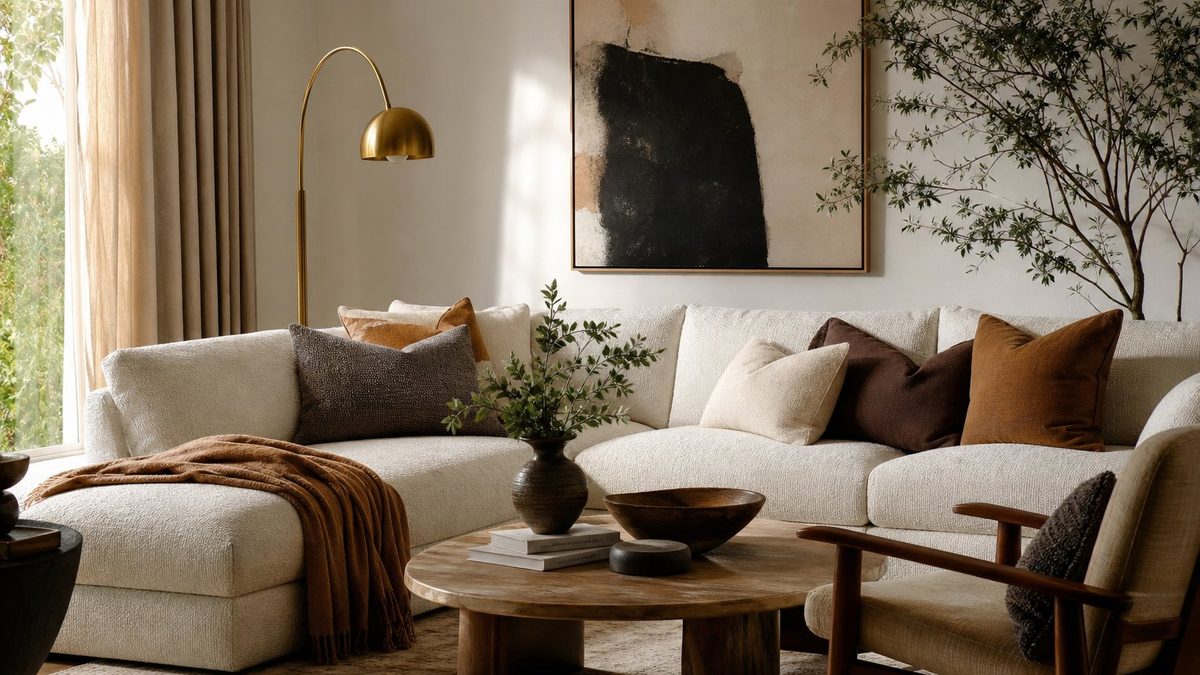
Trends come and go quickly, but the feeling of walking into a room and instantly relaxing does not. The most-loved interiors share a handful of decisions — and almost none of them are expensive. This guide walks through the choices we make most often with homeowners who want warmth rather than spectacle.
Comfort is the new luxury
For a long time, interiors were judged on how they photographed. The rooms people love living in are judged differently — on how they feel at the end of a working day. That shift has changed the way we plan decor: fewer statement pieces, more thought about seating depth, sightlines and the quiet details that make a space restful.
- Arrange seating in conversation groups rather than pushing everything against the walls.
- Leave breathing room around furniture; empty floor is a design decision, not wasted space.
- Choose pieces you can imagine repairing rather than replacing.
- Buy the largest rug that fits the arrangement — small rugs shrink a room instantly.
Colour palettes that age well
The safest palette is one drawn from your own home. Start with a warm neutral for the walls, then pull two supporting tones from a material you already love: timber, stone, a favourite textile. Depth comes from tone-on-tone layering rather than from a single saturated accent that will date within a season.
Pick paint colour last, once the floor, the largest furniture piece and the window treatments are decided. Colour should echo the room, not fight it.
Two touches of a stronger colour — cushion piping, a lamp base, the back of a shelving unit — will carry as much personality as a boldly painted wall, and they are far easier to live with.
Layer light instead of lighting a room
One bright ceiling fitting flattens everything it touches. Layering works far better with the same wiring: general light for cleaning and tasks, task light where you read or cook, and accent light to graze walls and shelving so the room gains depth after dark.
- Warm, dimmable bulbs in living rooms; brighter, cooler light in kitchens and bathrooms.
- Wall lights and floor lamps free up surfaces and remove the glare of downlights on glossy finishes.
- Dimmers and layered switches separately so evening light can be gentle rather than all-or-nothing.
Materials that feel good underfoot
Barefoot comfort starts at the floor. Hardwood and engineered wood bring warmth and character that improves with wear; tile belongs where water and traffic meet; resilient flooring now imitates timber convincingly and stands up beautifully to pets and busy hallways. Whichever you choose, the subfloor preparation matters more than the finish you can see.
Trade-offs worth knowing
Solid wood can be sanded and refinished many times over its life and suits dry rooms. Engineered wood handles humidity swings better and works over underfloor heating. Porcelain and stone are the most resilient but feel cool underfoot — pair them with rugs where you stand barefoot most. Resilient floors are practical and quiet, though they cannot be sanded later.
Small rooms, generous thinking
Storage is the difference between a room that looks designed and one that looks full. Built-in joinery along a single wall usually frees more floor than scattered furniture, and it gives tall rooms a sense of proportion. In bathrooms and hallways, recessed shelving between studs costs almost nothing and removes clutter completely.
- Use the full height of walls — the least-used storage sits above eye level.
- Choose furniture that multi-tasks: an ottoman that stores, a bench that seats and holds shoes.
- Keep surfaces deliberately clear in the rooms you use most; visual quiet lowers the temperature of a whole home.
Where to start
Begin in the room you use most and address the one thing that irritates you daily — the light, the storage, the floor, or the arrangement. Solve that properly first, and the rest of the house becomes far easier to plan because you will know how you actually want to live in it.
If you would like a second opinion, our team can walk your space, talk through materials and put the options in writing before any work is scheduled.